
Myth or reality
Myth: anyone can negotiate with a supplier
Procurement negotiation is not an inborn talent but a learnable profession. What professional negotiators do differently, and how to develop your team.
19 October 2026 · 5 min read
Procurement projects rarely fail on technology or process. Four practices that keep the new way of working alive six months after go-live.
ProcurePro 4 min read
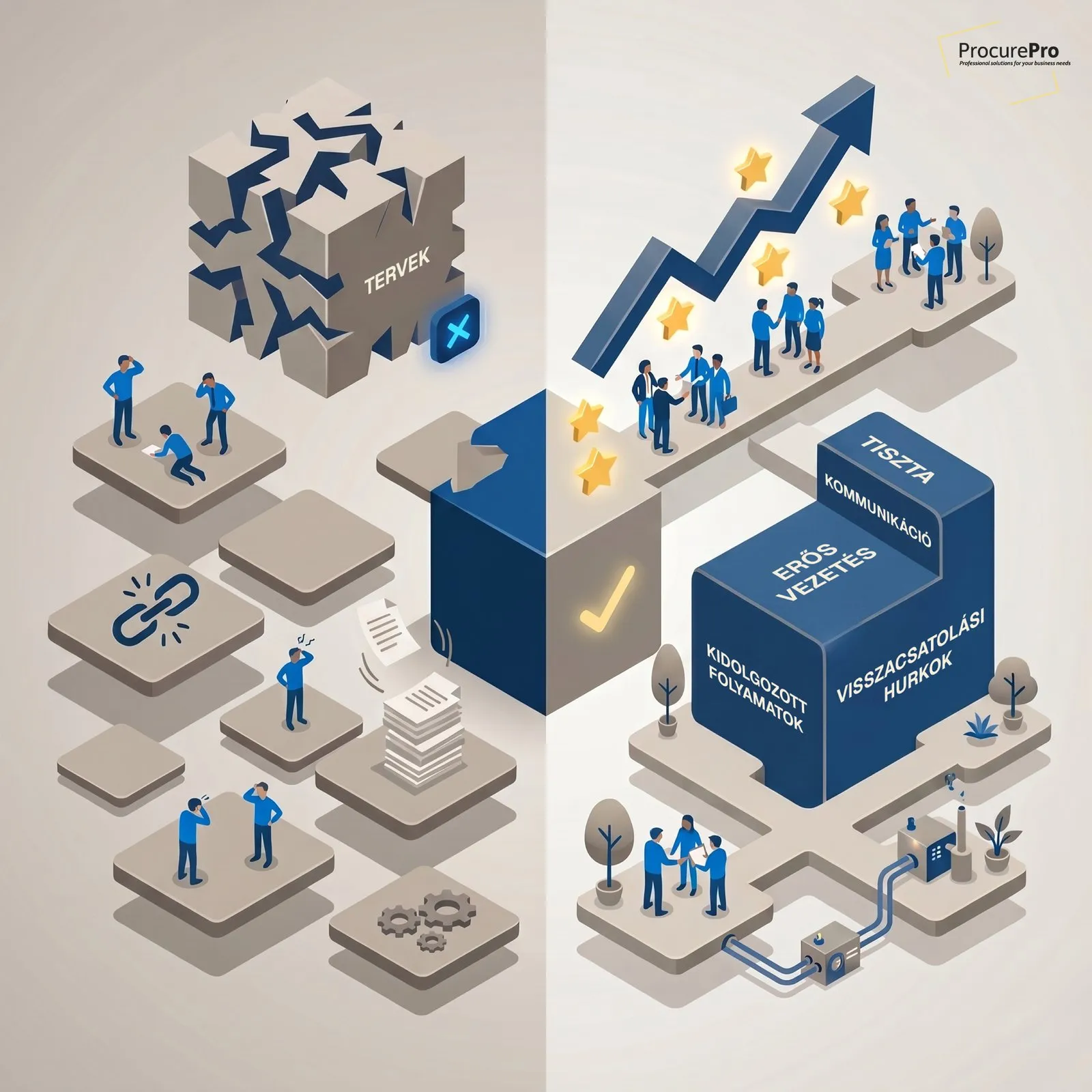
We have seen all of these in procurement transformation projects:
In none of these cases was technology or process the common factor. The common factor was the absence of change management.
Many companies still see procurement as a back-office function that “just places orders”. It follows that a procurement transformation is seen as procurement’s internal business. It isn’t.
A procurement transformation directly affects three or four departments: engineering, finance, legal and operations. Indirectly it affects ten or twelve more, everyone who ever orders anything. Each of them has old habits, their own interests and their own worries. The engineer worries about losing a say in supplier selection. The production manager worries that ordering will get slower. Finance worries about handling yet more exceptions.
If nobody answers those worries, people will not oppose the transformation openly. They simply won’t use the new system.
Not during the project, not once resistance has appeared. Before the project kicks off, we map who the change affects, how much influence they have, and how much they support the transformation today. That shows who needs a one-to-one conversation, who should be involved in the design, and who only needs regular updates.
A simple table is enough: name, department, influence, current attitude, what they lose and what they gain. It is the cheapest risk reduction available at the start of a project.
If the head of procurement announces the transformation, other departments hear “procurement wants something from us again”. If the managing director explains why it is needed now and what the company expects, the transformation becomes everyone’s business.
This does not need a long speech. Three sentences will do: what the problem is today, what will change, and why it can’t wait any longer. What matters is who says it.
The old process often lives on quietly next to the new one. As long as the spreadsheet is still available and ordering by email still works, many people stick with what they know.
So for every new process step we set a point at which the old way officially ends. We announce it in advance, communicate it clearly, and celebrate the first wins. The old spreadsheet gets archived, the old mailbox gets closed. With no way back, the new way of working becomes the norm sooner.
Most projects plan two weeks of support after go-live, then the team moves on. That is exactly when old habits creep back. An urgent order comes in, someone handles it the old way “just this once”, and a month later that has become the rule.
We stay close to users for roughly three months after go-live. Short weekly check-ins, quick answers to questions, and constant monitoring of exceptions. When someone bypasses the process, the right response is not punishment but finding out what the process is missing.
Not when the system goes live. When people are still using it six months later.
You can measure this. How many orders go through the new process, and how many bypass it? Did the planned savings materialize? Has the procurement cycle time dropped? If those numbers still look right six months after go-live, the change has happened.
Prosci’s change management research has reached the same conclusion for years: project success depends largely on how active the executive sponsorship is and how deliberately the people side is managed. Procurement is no different from any other transformation. It just gets forgotten more often.
In our procurement and process development projects, change management is part of the project plan from day one. If you are about to start a transformation, or need to restart a stalled one, take a look at our project management service and our process development work. The Kraljic matrix helps decide which suppliers deserve the most attention during the change.
What did your last transformation fail on? If you would like to talk it through, book a free 30-minute call.
Before the project starts. Map the stakeholders and prepare the communication plan before the kick-off, because the first weeks decide whether colleagues support the change or wait it out.
Top management. If the 'why now, why this way' message comes only from the head of procurement, other departments see it as procurement's own business. If the managing director says it, it becomes the whole company's business.
In our experience, intensively for about three months. Most projects end support after two weeks, which is exactly when old habits start coming back.
Not on go-live day, but six months later. We look at how many people use the new process, how much purchasing still happens outside it, and whether the planned savings materialized.
Myth or reality
Procurement negotiation is not an inborn talent but a learnable profession. What professional negotiators do differently, and how to develop your team.

Hackett Group's 2025 benchmark shows top procurement organizations run at lower cost and deliver more savings. What can your team take from it?

Problems and solutions
A faulty first delivery and a stopped production line. Six steps to supplier pre-qualification, from questionnaire to PPAP to contractual change control.
A free 30-minute call — then you decide. No sales process, no obligation.