

Myth or reality
Myth: anyone can negotiate with a supplier
Procurement negotiation is not an inborn talent but a learnable profession. What professional negotiators do differently, and how to develop your team.
19 October 2026 · 5 min read
What AI agents can actually do in procurement today, what still needs human review, and what separates successful rollouts from failed ones.
ProcurePro 5 min read
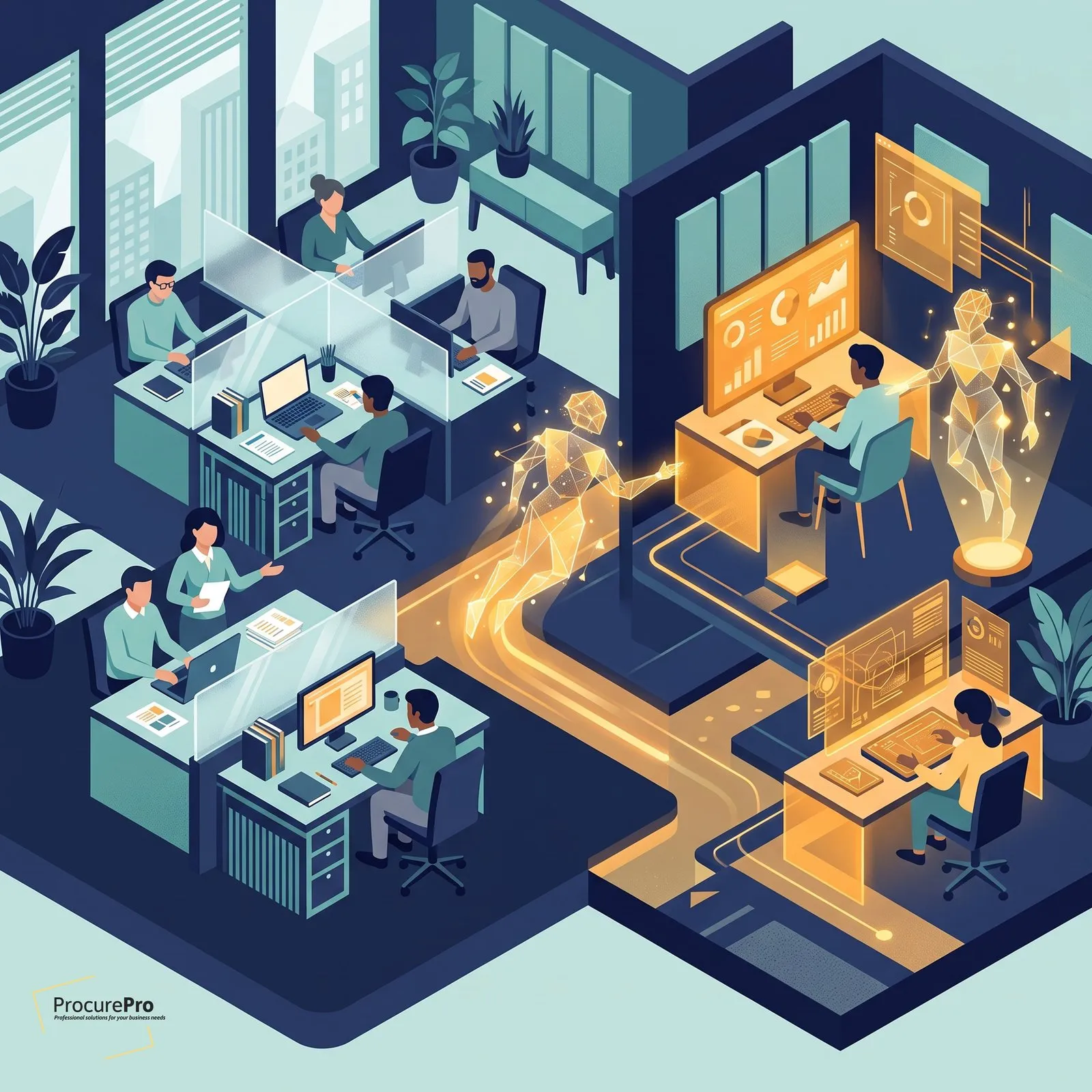
Every day brings another article or post claiming that AI agents are transforming procurement. Then we look at how our clients actually use them, and the picture is far more nuanced.
AI in procurement is no longer an experiment. At the same time, it is nowhere near able to do everything the marketing material promises. This article sums up where practice stands in mid-2026: what works, what works with care, and what does not yet work in any meaningful way.
Current tools handle these tasks reliably, provided they get good data:
What these have in common: they are well-defined, repetitive tasks, and a person checks the result. The AI does most of the work, and the buyer’s time goes into checking and deciding.
Here the AI saves time, but it does not take over responsibility. Always check the result against the original offer or data source before basing a decision on it.
Successful rollouts do not set out to have AI do everything. They look more like this:
Failed rollouts typically start from the other end. The company looks for a “transformative AI platform”, buys a large software suite, and two years later finds that only a fraction of its features are in use and the team is disappointed. So the difference is not the tool. Successful companies start from a measurable goal.
Do not try to do everything at once. One AI project should cover one concrete slice of a process. If the first project is narrow and easy to measure, you will have numbers after three months, and those make the next step easier to get approved by management.
Data quality matters more than the tool. If the data is a mess, the AI automates the mess. Fix the master data and the process first. Our article on AI in procurement describes where to start.
Buyers will not disappear. Repetitive administrative work shrinks, and the time freed up goes to strategic work: negotiation, supplier relationships, risk management.
There is no “AI-proof” buyer. There are buyers who learn to fit the tool to their own work, and buyers who do not.
Besides the time saved, AI tools bring risks. Deal with them from day one:
None of these is a reason not to introduce AI. They are a reason to give the rollout an owner and rules.
Introducing AI in procurement is first of all a process question. With 41 years of combined multinational procurement experience, we help you choose the first process slice, put the process and data behind it in order, and measure the result. See our process development service, or request a free consultation.
An assistant answers a question or writes text, and the decision and next step stay with a person. An agent carries out several steps on its own: it looks up data, compares, drafts, and asks for approval only at the end. Most working solutions in procurement today sit somewhere between the two.
Good enough that the data for the chosen process slice is consistent: uniform categories, one master record per supplier, mandatory fields filled in. You do not need to clean up the whole company's data, only the part the AI will work on.
The buyer who approves and sends it. The AI drafts; a person reviews and takes responsibility for any contractual commitment or message sent to a supplier.
Record the baseline before you start: number of items, manual hours and errors per month. After three months, measure the same things again. Without a baseline, you end up with impressions, not numbers.
Myth or reality
Procurement negotiation is not an inborn talent but a learnable profession. What professional negotiators do differently, and how to develop your team.

Hackett Group's 2025 benchmark shows top procurement organizations run at lower cost and deliver more savings. What can your team take from it?

Problems and solutions
A faulty first delivery and a stopped production line. Six steps to supplier pre-qualification, from questionnaire to PPAP to contractual change control.
A free 30-minute call — then you decide. No sales process, no obligation.